
In some parts of the world, people already know that when the sun is intense, life changes rhythm. Streets become emptier during critical hours, houses close up during the day, cities seek shade, and families organize to protect the most vulnerable. In Portugal, we still tend to talk about the heat as "just a few more hot days," but the truth is that extreme heat days are no longer just uncomfortable—they can be dangerous. They affect health, sleep, productivity, the safety of the elderly, children, animals, and even how we use our homes.
The important question is simple: what do countries more accustomed to heat do that we should also start doing?
The first rule: do not let the heat in
In countries in the Middle East, North Africa, southern Spain, and various parts of India, there is an old idea that remains very current: a cool home starts before any machine is switched on. For centuries, houses were designed to resist heat, with thick walls, light colors, internal courtyards, protected windows, external shades, cross-ventilation, and all this had one goal: to prevent heat from entering. It's almost like a thermos. If we protect the house well during the day, it better maintains the internal temperature.
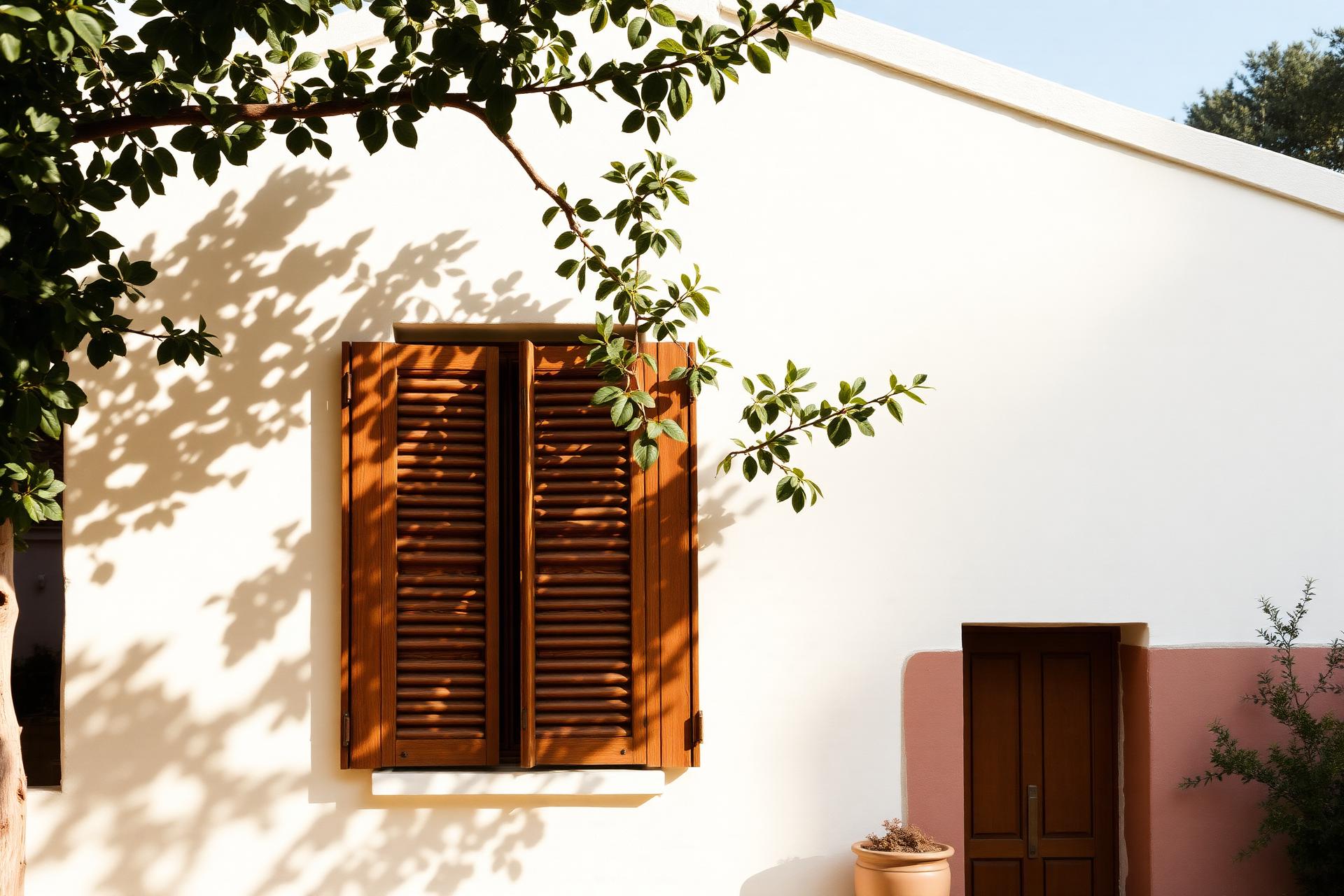
In Portugal, we can apply this logic simply. During the hottest hours, we should close blinds, shutters, and curtains, especially on windows exposed to direct sunlight. It might seem strange to close the house when it's hot, but it makes sense: we are blocking the sun from entering before it turns the room into an oven. The house should breathe early in the morning and at night, when the outside air is cooler. Then, yes, we open windows, create a draft, and let the accumulated heat out. The most common mistake is to open everything at midday, as if inviting fresh air in. But, often, what enters is only more heat.
The second rule: adapt the routine
In hotter countries, life does not continue as usual during a heatwave. The routine changes. In some regions of Spain, Greece, India, or Australia, physical exertion is avoided during critical hours. Heavy tasks are left for early. Travel is planned. People learn to respect their bodies, and perhaps this is one of the great lessons: extreme heat cannot be overcome with stubbornness.
On hotter days, cleaning the garage at three in the afternoon, doing construction work, carrying heavy shopping, or walking in the sun as if nothing is wrong can be costly. The body is already working to cool down. Forcing it to make even more effort is like asking an overheated car to climb a mountain. The ideal is to organize the day differently. Shopping in the morning, household chores early or late in the day, exercise only during safe hours, light meals, more breaks, more water, and less rush. It’s not laziness. It's thermal intelligence.
The third rule: create cool zones inside the house
Not all houses have air conditioning. And even when they do, it doesn't always make sense to cool the entire house. A strategy used in many hot countries is to create a refuge room: the coolest space in the house, where you spend more time during difficult hours. It can be a north-facing bedroom, a room with less sun, a room with better ventilation, or a space where you can combine shade, a fan, and water. The idea is simple: if the whole house cannot be comfortable, at least one area should be safe. In this room, it is advisable to have water nearby, light clothing, necessary medication, a charged cell phone, and important contacts. For elderly people or those with chronic illnesses, this can make a huge difference.
The fourth rule: shade is gold
In hot countries, shade is not decoration, it is infrastructure. Singapore, for example, invests heavily in trees, green corridors, coverings, green facades, and urban planning to reduce heat. Barcelona has created climate refuges in libraries, schools, gardens, and community centers, so people have cool places to go during periods of extreme heat. This shows us something important: fighting heat is not just the responsibility of each family, it is also the responsibility of cities.
We need more trees on the streets, more shade at bus stops, more protected benches, more drinking fountains, more accessible cool spaces, and fewer dark pavements that accumulate heat. A street without shade, on extreme days, is no longer just uncomfortable. It becomes a barrier for the elderly, children, workers, and people without cars. At home, we can start with what is within our reach: awnings, plants, pergolas, thermal curtains, shading nets, parasols on balconies, and external protection on the most exposed windows. External shade is always more effective than trying to remedy everything from the inside.
The fifth rule: use materials that do not turn the house into an oven
Some countries have invested in light-colored roofs, reflective paints, and materials that absorb less heat. The logic is simple: dark surfaces heat up more. Light surfaces reflect more sunlight. This is especially important for roofs, terraces, annexes, garages, and very exposed facades. Of course, not all of us can change the roof overnight, but when there are renovations, remodels, or maintenance, it's worth considering this. Color, insulation, and materials are not just aesthetic choices; they influence home comfort and energy bills. A home prepared for heat is not just a more comfortable home. It is a home that causes less stress.
The sixth rule: air conditioning yes, but wisely
In very hot countries, air conditioning is common. But it also brings challenges: it increases energy consumption, adds to the bill, and, when used indiscriminately, can contribute to heating the outside even more. Therefore, the smartest strategy is not to start with air conditioning, but to start with everything that reduces the need for it. First, we block the sun, then we ventilate at the right times, then we reduce internal heat sources, such as ovens, strong lights, unnecessarily connected equipment, or machines working during the hottest hours, and only then do we use air conditioning or fans as support.
If there is air conditioning, it may make sense to concentrate it in one room, close doors, and create a comfort zone. There is no need to turn the entire house into a refrigerator. And there is an important note: the fan helps to feel relief, but at very high temperatures, it may not be enough to protect health. In these cases, it is necessary to find a truly cool space.
The seventh rule: taking care of others
Countries better prepared for heat know that weather warnings are not enough; it is necessary to know who is at risk: elderly people living alone, babies, people with heart, respiratory, or kidney diseases, pregnant women, outdoor workers, people without adequate housing, animals. All need extra attention.
A phone call might seem small, but it can change everything.
- "Do you have water?"
- "Were you able to close the blinds?"
- "Is the house too hot?"
- "Do you need me to bring you anything?"
- "Is your medication organized?"
These are simple questions. But, on days of extreme heat, community care is as important as the weather.
What we should have at home on very hot days
There's a small list worth preparing before the heat intensifies.
- Water always available.
- Light foods.
- Fruit.
- Simple meals.
- Damp towels.
- Water spray bottle.
- Fan or air conditioning, if available.
- Light and bright clothing.
- Sunscreen.
- Organized medication.
- Charged cell phone.
- Important contacts at hand.
And, of course, pay attention to animals: fresh water, shade, and never leave them locked in cars, unventilated balconies, or overheated spaces.
Warning signs that should not be ignored
Extreme heat can cause serious problems: dizziness, confusion, intense weakness, very hot skin, vomiting, severe headache, fever, or feeling faint are warning signs.
In these cases, waiting "to see if it passes" is not an option. You should seek help. In Portugal, you can contact SNS 24 at 808 24 24 24 or call 112 in a serious situation.
The future will demand smarter homes — not necessarily more technological ones
When we talk about heat-prepared homes, many people immediately think of expensive technology, but hotter countries show us that a home's primary intelligence lies in the basics: shade, ventilation, insulation, the right materials, and good habits. A smart home is not just one with sensors and commands on the cellphone; it is one that protects those who live in it.
In the coming years, we will talk more and more about thermal comfort, energy efficiency, climate risk, insurance, urban rehabilitation, and city adaptation. Heat will no longer be a summer topic; it will become a housing topic.
And perhaps the great lesson is this: we don't need to wait for a crisis to prepare the house.
We can start today, lower the blinds, create shade, check on neighbors, drink more water, review routines, think more carefully about renovations, and choose materials with more care.
Because, on very hot days, taking care of the house is taking care of health.
Share this article on your social networks